
A Different Kind of Leisure
For Langford’s Hiko Salishan, the road to retirement has been shaped by family resilience, a grandmother’s example and an appetite for work that has not gone away.
By Up Close · November 19, 2026 · 4 min read
The goal is a chapter a day. Hiko Salishan laughs when describing how much time the writing takes, but the ambition is there: a first non-fiction manuscript, another project to make room for alongside hiking, time outside with the dog and business interests. It is not quite the retirement Hiko once imagined. Back then, the picture was simpler—put away the work and pick up the golf clubs.
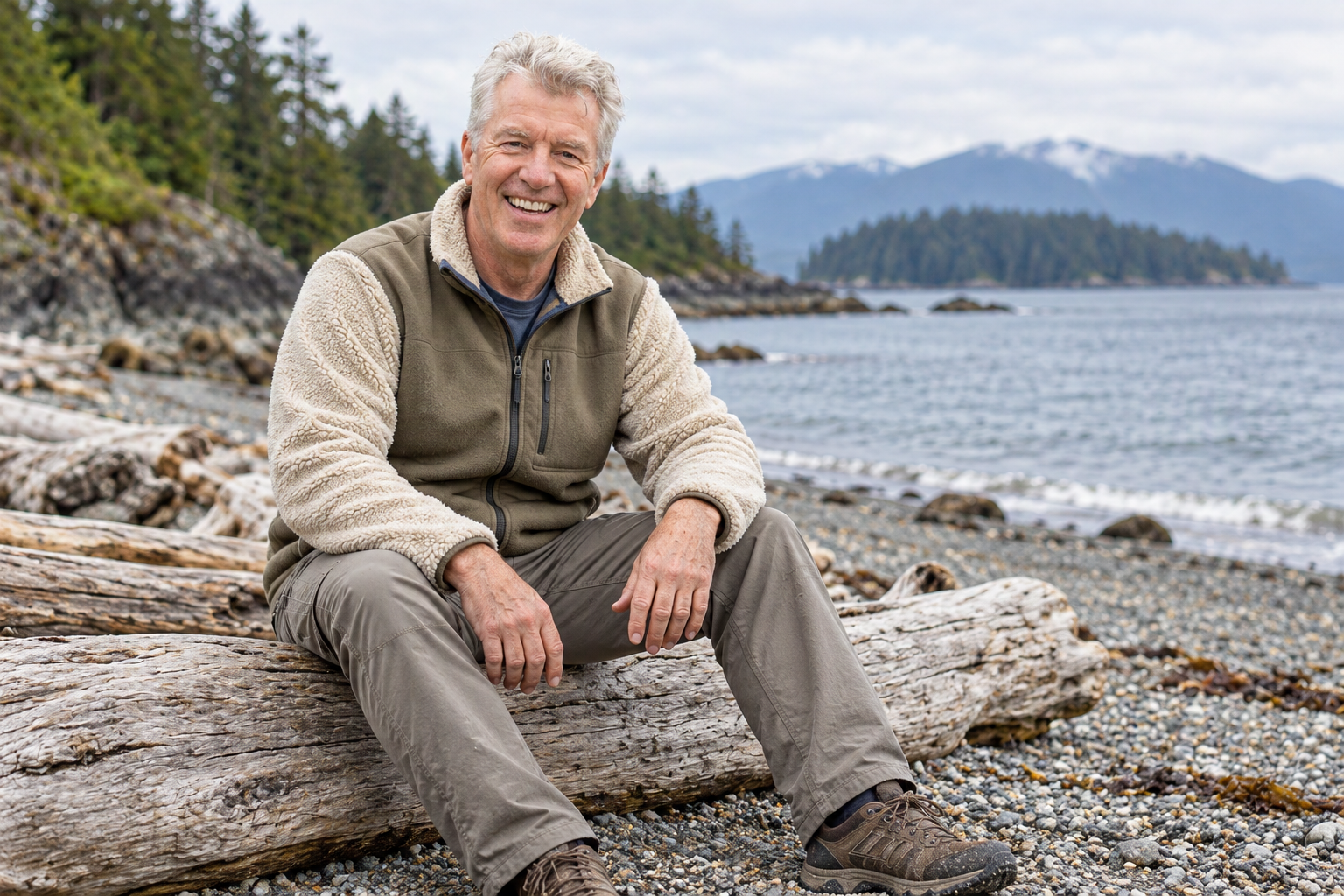
“I used to think that maybe I would just retire and golf a lot,” Hiko says, “and just kind of live the land of leisure.” These days, the Langford resident sees less need for a clean break. Being outdoors matters, but so does having something to work on. “I've got passion projects that are still involved in business. So I really enjoy doing a little bit of both.”
That combination is the clearest picture Hiko offers of retirement now. There is no particular date attached to it in the telling, no declaration that work must end for the next stage to begin. Instead, there is an evolving sense of what makes a satisfying day. The imagined abundance of golf has given way to something with room for both leisure and effort.
Long before that picture took shape, money was something Hiko understood would require attention. Growing up, there was not a great deal of it. Hiko’s parents experienced financial setbacks, followed by what Hiko describes as “some great wins later in life.” Their circumstances were not fixed, and that became an important part of the lesson.
“The key thing that I learned from them was that you just need to be nimble, you need to be adaptable,” Hiko says. Setbacks could happen; the response was to keep moving forward. Looking back, Hiko does not identify a single alarm-bell moment when retirement planning suddenly became urgent. The awareness was there early: taking responsibility for personal finances would be necessary to build a more comfortable lifestyle than the one Hiko’s parents had known.
The strongest influence, though, was a grandmother. Hiko remembers her as a strong, independent businesswoman whose example carried more weight than any particular saying about saving. Asked whether there was a piece of wisdom that stuck, Hiko answers, “It was more about what she did than what she said.”
She also introduced Hiko to The Wealthy Barber. The book’s concepts resonated, and Hiko traces an interest in business and finances back to that introduction—and, more broadly, to her. In this family money story, the lessons came from different directions: parents whose fortunes changed, and a grandmother whose independence offered a compelling model.
When asked what has made the biggest difference in preparing for retirement, Hiko’s answer is “leverage.” The word encompasses several things in the telling: getting into bigger real estate, doing renovations, and drawing on networks and people. Hiko describes looking for ways to accelerate effort and reach a return faster. It is an account of an active approach to building resources, with business and property both part of the story.
Yet the decision Hiko would most like to revisit involves a property sold rather than one bought. A rental condo in Vancouver was sold, and the proceeds went into a business. That reinvestment was “fine,” Hiko says. Still, if given the chance to rewind ten years and change one financial decision, keeping the condo would be the choice.
“It would have probably tripled in value,” Hiko says. That is a retrospective estimate, not a realised gain, but it explains why the sale lingers. Earlier in the conversation, asked about financial mistakes or setbacks, Hiko had answered, “No, not at all.” The condo emerges later as an exception—one regret in a story Hiko otherwise tells without many.
The more personal disruption was divorce. Hiko is careful to distinguish its emotional impact from its financial one: it did not really affect the finances, but it changed the idea of the future. “Just the whole idea of, you know, building a life with somebody is—is now different.” Retirement is not only a question of what resources will be available. It also holds an expectation of who might share that life.
Asked how that change was navigated, Hiko laughs and says, “I just pushed through it.” There were counselling sessions, too. The account is brief, but it echoes the family lesson about adaptability: a life can change shape, and moving forward remains necessary.
For all the emphasis on finding opportunities and making things happen, the word Hiko returns to when considering what a younger self should have known is quieter: consistency. Life happens, Hiko says, and sometimes access to capital is needed. The wish is not framed as discovering one extraordinary investment. It is about staying consistent through the interruptions.
There is little ambivalence about where Hiko wants to enjoy this next stage. British Columbia is “the best place to live,” with four seasons and beauty that still inspire enthusiasm. Hiking and being outside with the dog belong in that picture. So does the manuscript, demanding time one chapter at a time.
Hiko’s message to someone dissatisfied with their own position is rooted in the possibility of change: “Wherever you are today doesn't mean where you're gonna be tomorrow.” It is also a useful way to understand Hiko’s own shifting vision. Retirement once meant a departure from work. Now, it looks more like room to choose what is worth continuing.
Information provided is for educational purposes only and should not be considered financial, tax or legal advice.
← All stories